As residential temperatures soar due to global climate shifts, the importance of efficient and sustainable cooling becomes increasingly urgent. While classic air conditioners are effective, they often lead to higher energy bills and concerns over environmental impact. Fortunately, a new wave of cooling technologies offers smarter, more eco-friendly alternatives that enhance comfort while reducing energy consumption. For those seeking expert installation or urgent repairs, Ac repair and cooling services in Katy can help homeowners implement these innovative solutions with ease.
Homeowners today can choose from technologies like heat pumps, mini-splits, smart thermostats, and eco-friendly refrigerants to stay comfortable while reducing energy use and carbon footprints. These systems offer adaptability for different home types, with features like smart zoning for personalized comfort. Combining high-tech solutions with passive strategies, such as cross-ventilation and reflective materials, further lowers energy consumption. With new U.S. policies promoting environmentally friendly refrigerants, now is a great time to modernize home cooling for comfort and sustainability.
Heat Pumps: A Dual-Purpose Solution
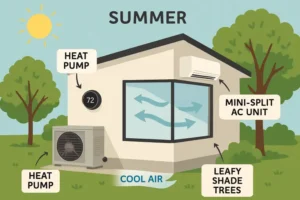
Heat pumps stand out for their ability to both heat and cool residential spaces while using up to 50% less electricity than traditional options, as confirmed by the U.S. Department of Energy. Unlike conventional air conditioners, heat pumps transfer heat rather than exclusively relying on energy-intensive cooling mechanisms. Government-backed initiatives, such as the commitment by 25 U.S. state governors and the Biden administration to increase the number of installed heat pumps, illustrate their rising popularity as a sustainable residential choice.
Ductless Mini-Split Systems: Flexible and Efficient
Ductless mini-split systems are ideal for homes without existing ductwork, offering targeted temperature control for each occupied room. Their design supports higher SEER (Seasonal Energy Efficiency Ratio) ratings compared to older, centralized units, translating to significant energy and cost savings. In addition to efficiency and quiet operation, the compact size of mini-splits makes them easy to install with minimal disruption a benefit for renovations or additions where extending ductwork isn’t practical.
Smart Thermostats: Intelligent Climate Control
Smart thermostats revolutionize household cooling by learning residents’ routines and adjusting temperatures proactively. According to sources like CNET, these devices can reduce energy use by anywhere from 15% to 23%. Their advanced features, such as remote control via a smartphone app and compatibility with broader smart home systems, allow homeowners to optimize comfort while minimizing energy consumption.
Eco-Friendly Refrigerants: Reducing Environmental Impact
The U.S. HVAC industry is shifting away from traditional refrigerants with high Global Warming Potential (GWP), such as R-410A. Federal regulations set to take effect in 2025 ban refrigerants with a GWP exceeding 700 for new installations, prompting companies to adopt alternatives like R-32, R-454B, propane (R-290), and even CO₂-based systems. These eco-friendly options are not only more efficient but also drastically reduce the environmental impact associated with conventional air conditioning.
Smart HVAC Zoning: Customized Comfort
Smart HVAC zoning divides a property into distinct zones, each controlled by separate thermostats and dampers. This allows for personalized cooling and optimized energy use, reducing utility bills by as much as 30%. Zoning is particularly effective in multi-story homes or spaces with infrequent use, ensuring resources are concentrated where they are most needed without overcooling empty rooms.
Natural Ventilation Systems: Harnessing the Breeze
Natural ventilation makes use of well-planned window placements, cross-ventilation, and passive design principles to improve indoor airflow and keep living spaces comfortable with minimal energy consumption. Advanced ventilation systems often use automatic sensors and controls to boost circulation when outdoor conditions are favorable, reducing costs by up to 40% compared to traditional AC. Incorporating strategic landscaping, such as planting shade trees near windows, can further enhance cooling naturally.
Conclusion
The landscape of home cooling now offers a rich diversity of choices each designed to balance efficiency, environmental responsibility, and personal comfort. Options such as heat pumps, mini-split units, smart thermostats, and eco-friendly refrigerants provide practical pathways to beat the heat sustainably. Homeowners who stay informed and adopt these innovations will enjoy more comfortable, cost-effective, and future-ready living spaces as climate demands evolve.