
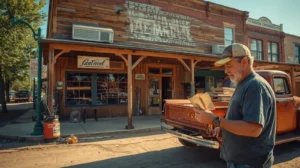
When people talk about vintage Americana, most think of American Pickers and its charismatic host. But behind the fame, the mike wolfe passion project is something much bigger than TV. It is a mission to protect old buildings, forgotten stories, small towns, and American craftsmanship before they disappear forever. What started as a love for vintage finds has turned into a national movement of history, preservation, and storytelling.
Who Is Mike Wolfe? (A Quick Background)
Mike Wolfe grew up in Iowa, discovering his love for old things before he even became a teenager. He would bike around rural neighborhoods and explore barns, garages, and abandoned buildings. What others saw as junk, Mike saw as pieces of American history.
His early curiosity turned into a full career when American Pickers launched in 2010. The show made him a global name. But Mike never viewed antiques as material possessions. For him, every object comes with a story, a community, and a memory worth saving.
What Exactly Is the Mike Wolfe Passion Project?
Many fans think the passion project is about collecting antiques. But the truth is much deeper.
The mike wolfe passion project is a large effort focused on:
-
Restoring historic buildings in small towns
-
Reviving forgotten neighborhoods and business districts
-
Supporting local artists and craftsmen
-
Documenting stories behind America’s backroads
-
Promoting heritage tourism and community pride
Instead of saving only objects, Mike is saving the places and people connected to them.
It blends architecture, history, art, travel, storytelling, and tourism into one mission: to protect America’s cultural identity before it fades.
How It Started: From Picking to Preservation
While filming American Pickers, Mike noticed something important. The most meaningful part of each pick wasn’t the item it was the person and the place. Old signs, motorcycles, diner stools, tools, neon lights, and gas pumps weren’t just things. They represented family memories, small-town history, old industries, and forgotten dreams.
That realization changed Mike’s direction.
He shifted from hunting for objects to saving stories, and eventually to restoring entire historic buildings and streets. The passion project grew step by step:
-
Picking antiques in Iowa
-
Launching American Pickers
-
Investing in restoration in LeClaire, Iowa
-
Expanding to Columbia, Tennessee
-
Introducing Two Lanes (blog + shop + storytelling)
-
Promoting heritage tourism and local craftsmanship nationwide
The Four Pillars of the Passion Project
To understand this mission clearly, it helps to break it into four core pillars.
1. Architectural Restoration
Preserving old commercial and residential buildings while honoring original designs.
2. Community Revitalization
Helping towns rebuild their local identity, businesses, and foot traffic.
3. Heritage Crafts & Local Makers
Supporting artisans who continue traditional trades.
4. Storytelling & Cultural Memory
Documenting America’s forgotten towns, roads, and people through photos, blogs, travel, and social media.
These pillars guide everything Mike does whether restoring a building or highlighting a small-town leather worker.
Case Study: Columbia Motor Alley From Abandoned to Iconic
One of the clearest examples of the mike wolfe passion project is Columbia Motor Alley in Columbia, Tennessee. The area was once a row of worn-down auto-industry buildings with no purpose. Many people believed they would eventually be demolished.
Mike saw potential.
He restored the buildings carefully instead of modernizing them beyond recognition. Brick walls, open beams, vintage signs, and industrial style all remain. Today, the alley is home to:
-
Coffee shops
-
Vintage stores
-
Artist studios
-
Community markets
-
Event spaces
What used to be a forgotten street now brings jobs, tourism, and pride to the town.
Case Study: Two Lanes Guesthouse & Historic Rentals
Another side of the preservation mission is the Two Lanes guesthouses. Mike restores old homes and buildings and turns them into rental properties. But these aren’t ordinary rentals. They feel like living museums.
Each guesthouse includes:
-
Vintage decor
-
Local artwork
-
Historic architectural details
-
Antiques with stories behind them
Visitors don’t just stay there they experience American history very closely.
The income from rentals helps fund more restoration projects, making the passion project self-sustaining rather than charity-dependent.
Two Lanes Mike’s Digital Diary and Heritage Brand
Two Lanes started as a blog and turned into something much bigger.
Through Two Lanes, Mike:
-
Shares photos from American backroads
-
Highlights craftsmen, artists, musicians, and small-town heroes
-
Documents the history of motels, diners, barns, and forgotten highways
-
Sells hand-picked and American-made goods
Two Lanes shows the philosophy behind the passion project:
“The real America isn’t on the highways. It’s on the backroads.”
It brings together travel, culture, craftsmanship, and storytelling in one place.
Supporting American Makers and Traditional Trades
Many crafts are dying out blacksmithing, leatherwork, neon sign making, denim tailoring, woodworking, and more. These skills once shaped America.
Mike believes these trades deserve protection.
Through Two Lanes and his restoration work, he:
-
Funds artisans
-
Promotes their work
-
Helps them find customers
-
Encourages young people to learn these skills
The success of the mike wolfe passion project creates success for independent makers too. It proves that heritage craftsmanship still has value in modern times.
Nashville’s Big Back Yard & Route-Based Tourism
Mike has also been involved in promoting travel routes to support small towns. Instead of focusing only on big cities, he highlights road-trip tourism.
This includes:
-
Route 66 towns
-
Local music and art trails
-
Historic downtowns along backroads
-
Old diners, motels, mills, and industrial districts
The idea is simple:
If more people visit small towns, more businesses survive, and more history stays alive.
How the Passion Project Is Funded
Many people think this mission is charity. It isn’t. It is purpose-driven business.
Funding sources include:
-
Income from American Pickers
-
Antique Archaeology stores
-
Two Lanes shop
-
Merchandise and books
-
Guesthouse rentals
-
Partnerships and grants
The goal is to make the preservation efforts financially sustainable, so projects continue for decades not only when donations are available.
Community Response and Cultural Impact
Every town reacts differently, but the common pattern is positive. When buildings reopen, communities come back to life.
Examples of impact:
-
New jobs for residents
-
Higher foot traffic for local businesses
-
Increased property value without destroying history
-
Tourism that supports small entrepreneurs
-
A regained sense of identity and pride
Many people say they didn’t realize the value of their own town until a restored building reminded them of its beauty.
Future Vision: “100 Buildings, 100 Stories”
The next chapter of the mike wolfe passion project is an ambitious one.
The goal is:
Restore one historic building in every U.S. state.
This means:
-
Saving 100 buildings
-
Documenting 100 stories
-
Supporting 100 communities
More than 20 buildings are already completed, and more are on the way. If the project reaches its goal, it will be one of the most significant preservation initiatives in American pop-culture history.
How Fans and Supporters Can Participate
You don’t need to be a picker to be part of this mission. Anyone can help preserve history.
Here are simple ways:
-
Travel to small towns and spend money locally
-
Share and follow Two Lanes online
-
Buy from American makers instead of mass-produced brands
-
Stay in restored guesthouses
-
Suggest historic sites in need of help
-
Celebrate heritage instead of replacing it with trends
A single post, visit, or purchase can support a whole community.
FAQs About the Passion Project
Q: Is the passion project non-profit?
No. It runs as a purpose-driven business model so it can support itself.
Q: Is it connected to American Pickers?
Not officially. The show helped create awareness, but the mission goes far beyond TV.
Q: Can fans recommend buildings for restoration?
Yes. Suggestions from local residents are welcomed.
Q: Will it ever become a TV show?
Mike says the focus is action, not entertainment. Smaller documentaries may appear online.
Conclusion
The mike wolfe passion project is more than a hobby and more than a business. It has become a cultural movement. Through architectural restoration, storytelling, heritage tourism, and support for traditional craftsmen, Mike is protecting the soul of small-town America one building at a time.
His message is simple but powerful:
“History isn’t just something to remember. It’s something to keep alive.”
Every restored structure, every local craftsman promoted, every backroad highlighted shows that history still matters. And as long as communities care about their stories, the passion project will never slow down.